
Routal vs Excel
The spreadsheet lasts longer than any salesperson will admit. This is about where its limit sits and what happens past it.
What planning in a spreadsheet costs
It never shows up on an invoice, which is why it is hard to see.
With Excel
The planner's morning
Sequencing stops by hand is a daily puzzle that comes out of someone's working morning, every morning.
The kilometres nobody measures
Without an optimized route to compare against, the overspend stays invisible: just a fuel bill that looks normal.
All the judgement in one head
The spreadsheet works because someone knows which customer goes first. The day they are out, the round feels it.
With Routal
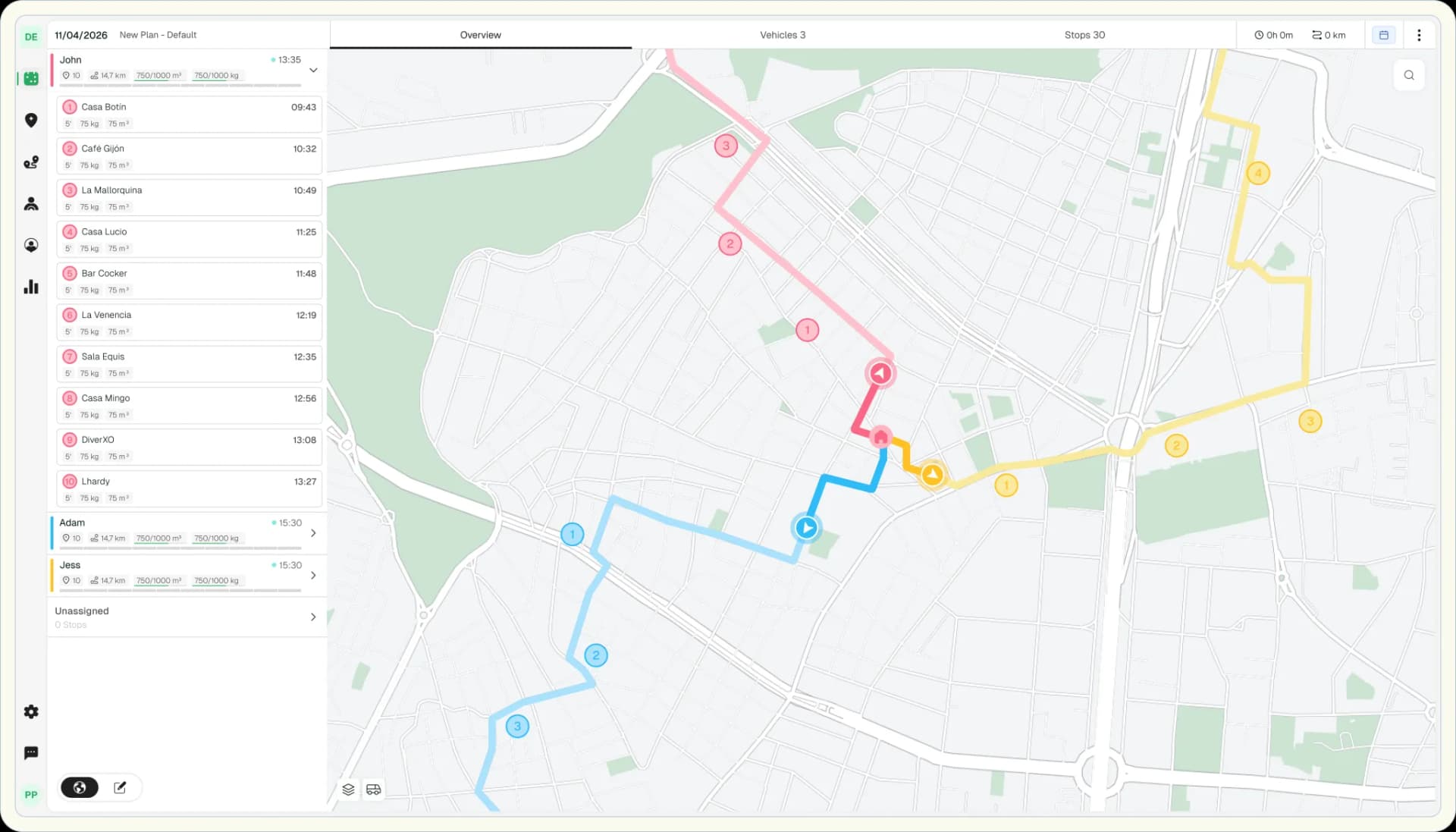
The system builds the route
Upload stops as a CSV or from the ERP and the route comes back with windows, capacities and zones respected.
Driver and customer see what you see
The driver carries the route on their phone and captures signature and photo; the customer gets an ETA without calling.
The report is already written
Distance, on-time rate, failed stops and cost per delivery come out on their own, in-house and subcontracted in one table.
What Excel does better
When the spreadsheet is still the right answer for your operation.
Already paid for, already installed
No purchase process, no vendor onboarding. Nothing beats the cost of opening a file you already have.
It bends to whatever you need
A new column, an odd case? Two minutes in a spreadsheet. No software, ours included, matches that.
Everyone already knows how to use it
No training, no resistance to change, it works offline and the file is yours. In a small operation, that counts.







Real results from real operations
Delivery teams already running on Routal, in their own numbers.
+15%
more productivity at Alfil Logistics
30 min
of training to plan routes at Sant Joan de Déu
“Routal has become a key tool in our daily operations. We save time, money, and gained full visibility over our entire operation. The experience couldn't be better.”

“The platform is very intuitive and easy to use. It lets you optimize routes quickly and efficiently and monitor deliveries in real time, which translates to significant time and cost savings.”

“It's a very easy-to-use platform, and support is fast and efficient when you have questions. I've been using it for two years without any issues.”

“I've used it at different companies and it has brought great benefits: better fleet utilization, fuel savings, reduced wear, and lower maintenance costs.”

“We're very happy using Routal. It's simple and easy to learn, super useful for new team members. Creating new stops is incredibly easy with bulk and individual upload.”

“What I liked most about Routal is how user-friendly the platform is. The maps, the dynamism, the fonts: everything is very easy and quick to learn.”

“Great route optimization, ease of use, and above all customer support. When you have questions, they're always resolved quickly.”

“My experience has been great. They're always updating with new tools. It's very dynamic and the time calculations are perfect when designing routes.”

“The intuitive way to use it. No thousands of buttons for basic tools, and the interface is super dynamic and pleasant. It's been the most reliable routing platform.”

“I've been using it for over 5 years and I'm satisfied. They focus on functionality while keeping a clean aesthetic. Customer support is fast.”

“It fills me with satisfaction to generate my routes knowing there's no margin of error. The daily route optimization is fantastic and you learn fast.”

“I build flexible routes, and Routal helps me offer efficient options.”
“It's a very helpful app: it saves a lot of time when planning our logistics.”
What teams ask before making the jump
Real questions from teams who have planned in a spreadsheet for years.
Can you plan delivery routes in Excel?
When does the spreadsheet stop working?
What does Excel do better than any routing software?
Do I have to stop using Excel?
How much does Routal cost?
Still missing an answer? Talk to our team
How much does Routal cost?
Routal costs €199 a month with 4 vehicles included, and each extra vehicle adds €49 a month, excluding VAT. You can try it for 10 days without a card. If you need to connect it to your ERP or want us to run the rollout with you, Enterprise is priced to fit and includes a month of onboarding.
See full pricingReady to switch from Excel?
Import your data and go live in under a week. No lock-in.