
Routal vs Descartes
Routal and Descartes, point by point: planning, dispatch, tracking and proof of delivery.
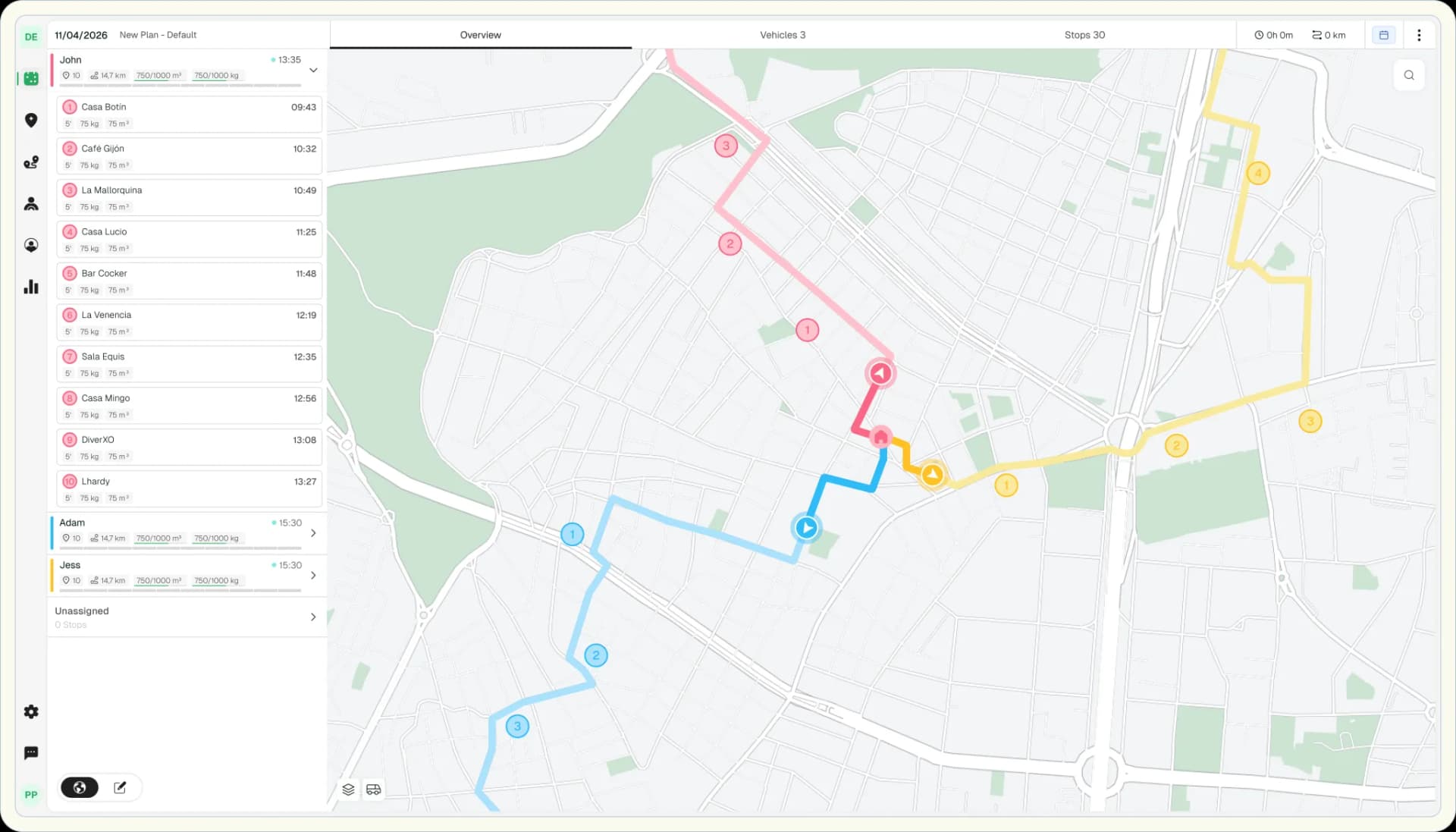
Feature-by-feature comparison
| Routal | Descartes | |
|---|---|---|
| Route optimization | ||
| Advanced constraints (time windows, capacity, skills) | Included | Included |
| Zone-based planning | Included | Included |
| Real-time traffic routing | Included | Included |
| Traffic simulator | Included | Included |
| Electric vehicle optimization | Included | Not published |
| Driver management | ||
| Native driver app (iOS & Android) | Included | Included |
| Route dispatch (WhatsApp, push) | Included | Included |
| Proof of delivery (photo, signature) | Included | Included |
| Barcode / label scanning | Included | Not published |
| Offline mode for drivers | Included | Not published |
| Customer experience | ||
| Real-time fleet tracking | Included | Included |
| SMS & email notifications | Included | Partial / limited |
| WhatsApp notifications | Included | Not published |
| White-label customer portal | Included | Partial / limited |
| Customer satisfaction ratings | Included | Not published |
| Analytics & reporting | ||
| Delivery status analytics | Included | Included |
| CO₂ emissions calculation | Included | Not published |
| Developer tools | ||
| Full REST API | Included | Included |
| Configurable webhooks | Included | Not published |
| Support & onboarding | ||
| Guided onboarding | Included in Enterprise | Included |
| Dedicated support manager | Included in Enterprise | Included |
Why some teams step off Descartes
Rarely about the product. About the size of the suit.
With Descartes
They bought for an operation bigger than theirs
Bought for the three-year plan. Three years on, the fleet is the same and the team uses a fraction.
The rollout ate the year
The project tied up operations for months. By go-live, the problem had already been solved by hand.
Every adjustment depended on someone outside
Delivery rules change every few weeks. If each change is a request, the system runs a month behind the street.
With Routal
Live this week, not this quarter
Upload a CSV and deliver that afternoon. If the ERP needs wiring in, that's weeks, not quarters.
Sized for your operation
Descartes targets fleets above 20 vehicles. At 5–30 daily routes, you pay for a suite built for someone else.
Changes without raising a ticket
Zones, time windows or the driver workflow: your dispatcher changes them on screen. No ticket, no consultant.







Real results from real operations
Delivery teams already running on Routal, in their own numbers.
+15%
more productivity at Alfil Logistics
30 min
of training to plan routes at Sant Joan de Déu
“Routal has become a key tool in our daily operations. We save time, money, and gained full visibility over our entire operation. The experience couldn't be better.”

“The platform is very intuitive and easy to use. It lets you optimize routes quickly and efficiently and monitor deliveries in real time, which translates to significant time and cost savings.”

“It's a very easy-to-use platform, and support is fast and efficient when you have questions. I've been using it for two years without any issues.”

“I've used it at different companies and it has brought great benefits: better fleet utilization, fuel savings, reduced wear, and lower maintenance costs.”

“We're very happy using Routal. It's simple and easy to learn, super useful for new team members. Creating new stops is incredibly easy with bulk and individual upload.”

“What I liked most about Routal is how user-friendly the platform is. The maps, the dynamism, the fonts: everything is very easy and quick to learn.”

“Great route optimization, ease of use, and above all customer support. When you have questions, they're always resolved quickly.”

“My experience has been great. They're always updating with new tools. It's very dynamic and the time calculations are perfect when designing routes.”

“The intuitive way to use it. No thousands of buttons for basic tools, and the interface is super dynamic and pleasant. It's been the most reliable routing platform.”

“I've been using it for over 5 years and I'm satisfied. They focus on functionality while keeping a clean aesthetic. Customer support is fast.”

“It fills me with satisfaction to generate my routes knowing there's no margin of error. The daily route optimization is fantastic and you learn fast.”

“I build flexible routes, and Routal helps me offer efficient options.”
“It's a very helpful app: it saves a lot of time when planning our logistics.”
What teams ask before deciding
Real questions from teams with a Descartes quote on the table.
What is the difference between Routal and Descartes?
What does Descartes do better?
When does Descartes make more sense than Routal?
What does each one cost, and how long does it take?
How much does Routal cost?
Still missing an answer? Talk to our team
How much does Routal cost?
Routal costs €199 a month with 4 vehicles included, and each extra vehicle adds €49 a month, excluding VAT. You can try it for 10 days without a card. If you need to connect it to your ERP or want us to run the rollout with you, Enterprise is priced to fit and includes a month of onboarding.
See full pricingReady to switch from Descartes?
Import your data and go live in under a week. No lock-in.